
MeyerFire
  • Blog
  • Forum
  • TOOLKIT
    • ALL TOOLS
    • BUY THE TOOLKIT
  • UNIVERSITY
    • ALL COURSES
    • JOIN THE UNIVERSITY
  • PE Exam
    • PE Forum & Errata
    • PE Store
    • PE Tools
    • PE PREP SERIES
    • PE Old Questions
  • LOGIN
    • TOOLKIT-ONLY LOGIN
    • UNIVERSITY LOGIN
  • STORE
  • OUR CAUSE
    • ABOUT MEYERFIRE
    • JOB OPENINGS
    • BECOME AN INSTRUCTOR
    • HELP/SUPPORT
Picture

Omit Ceiling Sprinklers Entirely with All In-Rack?

12/19/2022

9 Comments

 
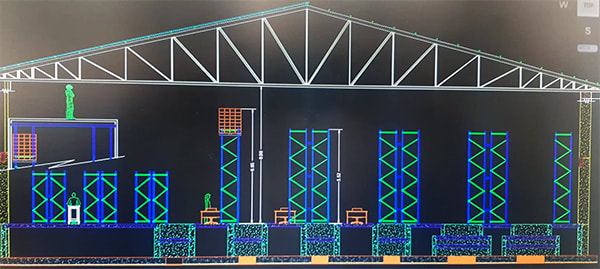
We have a project with a Class IV commodity rack storage area. The building has a roof slope around 24% (5.5 / 12).

Based on NFPA 13 2022 Edition, Section 20.9.1, one option for this case is "where storage is protected with in-rack sprinklers in accordance with one of the options in Section 25.6, provided no storage is placed above the highest level of in-rack sprinklers."

The question is: if a horizontal barrier and a level of rack sprinklers are installed above the last load level, and there is not going to be any storage above this level, can a system design be done based on 25.6 omitting the ceiling sprinklers?

The gap between the top of the load and the roof is about 6.5 meters in the highest area. 
Picture

Thanks in advance.

​​​​​​​​​​​​​​​​​​​​​​​​​​​Sent in anonymously for discussion. Click Title to View | Submit Your Question | Subscribe
9 Comments
Glenn Berger
12/19/2022 08:11:20 am

Got a few questions to be answered prior to giving an opinion.

Is this "horizontal barrier" acting as a complete ceiling above the highest level of storage? Is this barrier fire rated? Is the space above the barrier accessible?

Reply
Eric R
12/19/2022 08:49:46 am

Not having any ceiling level sprinklers at all seems like a pretty far stretch unless a full drop ceiling was installed at the bottom of the trusses. Especially with what looks like pretty wide aisles, I'd be worried that a fire starting in product left in the aisles would not have sufficient coverage from sprinklers in the racks.

I'd recommend reading the phase 3 report from the NFPA Research Foundation on storage under sloped ceilings. NFPA 13-2025 already has some proposed revisions to cover these situations that you can also check out on NFPA's proposal platform.

Link for Research Foundation report: https://www.nfpa.org/-/media/Files/News-and-Research/Fire-statistics-and-reports/Suppression/rfslopedceilingPhase3.ashx

Link for 2025 proposed changes: https://www.nfpa.org/codes-and-standards/all-codes-and-standards/list-of-codes-and-standards/detail?code=13&tab=nextedition

Reply
Eric R
12/19/2022 09:08:00 am

Having a few more minutes to think about this, and I don't see any way ceiling sprinklers could be removed completely.

Some possible options:

1. Install a drop ceiling across the entire area to make your ceiling flat with sprinklers hung below that drop ceiling. Then you can follow the normal designs and may not need in-racks at all.

2. Use your proposed idea for covering all the racks per 25.6. Then provide a non-storage occupancy design for the ceiling system that covers all the floor area hazards not directly inside the racks. Following the rules for 25.6 I don't think you'd have to add the two system demands together, so this wouldn't increase your overall water requirement beyond what you already needed for your in-rack design. Ceiling design could probably be EH1 or maybe OH2 depending on what commodities are being stored in the facility.

3. Ask for a variance to follow the proposed changes for 2025 and the guidance from the research foundation. This might significantly reduce the design demands of the in-rack system compared to 25.6, but you'd really want to bone up on the limitations of the testing report and compare your storage commodity and arrangement to what they used in the report.

Reply
Franck
12/19/2022 10:18:03 am

The answer is definitely no.
Normally with such a slope, you can’t protect storage occupancy per NFPA 13, unless you provide a false ceiling (flat) with sprinklers underneath.
In some circumstances, it is accepted, for rack storage, to allow the slope with ceiling sprinklers + in-racks. That way it is like protecting a limited storage height with ceiling sprinklers. But they can’t be omitted. Even with in-rack above the last level.

In addition, with storage, there are many possibilities to have some storage not in the racks (between the racks, for receiving/dispatching) where the ceiling sprinklers will control slightly, but not the in-racks.

Reply
Jesse
12/19/2022 10:46:52 am

In this case, I don't see you being able to omit ceiling level AS

Reply
Alex
12/19/2022 02:28:48 pm

As others have mentioned above, I do not see a way to omit ceiling sprinklers here.

Reply
Mike Meyers link
12/19/2022 05:19:21 pm

I agree with all, never leave out the overhead sprinklers.
As a Fire Inspector I can tell you signs do not stop companies from stocking above a designated height.
It always becomes a policing problem when allowing so called grey area exceptions.

Reply
Alan Larson
12/21/2022 01:58:26 pm

Look at Section 25.8. If the top of the rack had a horizontal barrier with the first complement of in-rack sprinklers directly below that barrier, with in-rack sprinklers placed appropriately from there towards floor level, what would the ceiling level sprinklers be protecting? I realize the notion of no sprinklers at the roof deck is novel, but it seems this section may allow that.

Reply
Eric R
12/21/2022 07:21:43 pm

My intent is for this to come across in the spirit of good natured debate!

Your line of reasoning could easily be applied to many storage design criteria that seem strange at first. Like, why do we need to sprinkler a warehouse full of filing cabinets? Or better yet, a warehouse full of sheetrock! (I've actually had to handle the sheetrock example).

The answer is the same as it's always been, fully sprinklered buildings massively reduce the likelihood of casualties or property damage from fire. Sprinklers installed along the ceiling are 100% guaranteed to be above the height of any stored commodities. They are going to be where the hot gasses from a fire collect, and their spray is going to cool the air closest to the structural elements (if not soaking them directly), which will help prevent weakening or collapse.

A rack with a top horizontal barrier will need to have enough structural strength to at-least support the weight of the barrier and the topmost sprinkler piping. That's a whole lot of free real-estate to throw those extra bundles of cardboard boxes used for shipping. They don't weight to much, so go ahead and put them way up on top!

And then not much longer: Oh hey, that shelf up there is actually pretty sturdy. Lets put the pallets of empty 5 gallon buckets up there too. They take up a ton of space that we could really use to store all the extra product that's been piling up with these containership delays backing up the supply chain! We can move them back once things return to normal.

Which eventually(hopefully) leads to: What do you mean your giving me an abatement order!?! That stuff has been up there for years and you've never had a problem with it before! No, I can't just take it down, I don't have anywhere else to put it You're gonna put me out of business!

Now, if you want say that the criteria for the ceiling system is for a Class I entirely non-combustible commodity, and protect it at (checks quickly) 0.17 density using high temp 5.6k uprights, you can probably make that argument. Not having any protection at all though just creates to many opportunities for human behavior to get itself in trouble.

Reply


Leave a Reply.

    SUBMIT A QUESTION
    Picture
    Why Sponsor?

    ALL-ACCESS

    Picture
    GET ALL OUR TOOLS

    SUBSCRIBE

    Subscribe and learn something new each day:
    I'm Interested In:

    COMMUNITY

    Top Dec '25 Contributors
    Picture
    Picture
    Picture
    Picture
    Picture
    Picture
    Picture
    Picture
    Picture
    Picture
    SEE LEADERBOARD

    YOUR POST

    SUBMIT A QUESTION

    PE EXAM

    Get 100 Days of Free Sample Questions right to you!
    SIGN ME UP!

    FILTERS

    All
    A1171
    ABA
    ADA
    ASCE 7
    ASME A17.1
    ASTM E1354
    Blog Thread
    Daily Discussion
    Design-documents
    EN 12259-1
    EN 12845
    Explosion Protection
    Explosion-protection-prevention
    Fire Detection And Alarm Systems
    Fire Dynamics
    Flammable And Combustible Liquids
    Flammable-combustible-liquids
    FM Global
    Human-behavior
    IBC
    ICC 500
    IEBC
    IFC
    IMC
    IPC
    IRC
    ISO
    Means Of Egress
    NBC
    NFPA 1
    NFPA 10
    NFPA 101
    NFPA 11
    NFPA 110
    NFPA 1142
    NFPA 1221
    NFPA 13
    NFPA 13D
    NFPA 13R
    NFPA 14
    NFPA 15
    NFPA 16
    NFPA 17A
    NFPA 20
    NFPA 2001
    NFPA 214
    NFPA 22
    NFPA 220
    NFPA 24
    NFPA 241
    NFPA 25
    NFPA 291
    NFPA 30
    NFPA 307
    NFPA 30B
    NFPA 31
    NFPA 33
    NFPA 37
    NFPA 400
    Nfpa-409
    Nfpa-415
    Nfpa-45
    Nfpa-495
    NFPA 497
    NFPA 5000
    NFPA 502
    NFPA 54
    NFPA 55
    NFPA 654
    NFPA 68
    NFPA 70
    NFPA 701
    NFPA 72
    NFPA 75
    NFPA 770
    NFPA 82
    NFPA 850
    NFPA 855
    NFPA 90A
    NFPA 92
    NFPA 96
    NICET
    OBC
    OSHA
    Passive Building Systems
    PE Prep Guide
    PE Prep Series
    PE Sample Problems
    Poll
    Smoke Management
    Special Hazard Systems
    UFC 3-600-01
    UFC 4-021-01
    UFC 4-211-01
    UPC
    Updates
    Water Based Fire Suppression
    Weekly Exams


    ARCHIVES

    February 2026
    January 2026
    December 2025
    November 2025
    October 2025
    September 2025
    August 2025
    July 2025
    June 2025
    May 2025
    April 2025
    March 2025
    February 2025
    January 2025
    December 2024
    November 2024
    October 2024
    September 2024
    August 2024
    July 2024
    June 2024
    May 2024
    April 2024
    March 2024
    February 2024
    January 2024
    December 2023
    November 2023
    October 2023
    September 2023
    August 2023
    July 2023
    June 2023
    May 2023
    April 2023
    March 2023
    February 2023
    January 2023
    December 2022
    November 2022
    October 2022
    September 2022
    August 2022
    July 2022
    June 2022
    May 2022
    April 2022
    March 2022
    February 2022
    January 2022
    December 2021
    November 2021
    October 2021
    September 2021
    August 2021
    July 2021
    June 2021
    May 2021
    April 2021
    March 2021
    February 2021
    January 2021
    December 2020
    November 2020
    October 2020
    September 2020
    August 2020
    July 2020
    June 2020
    May 2020
    April 2020
    March 2020
    February 2020
    January 2020
    December 2019
    November 2019
    October 2019
    September 2019
    August 2019
    July 2019
    June 2019
    May 2019
    April 2019
    March 2019
    February 2019
    January 2019
    December 2018
    November 2018
    October 2018
    September 2018
    August 2018
    July 2018
    June 2018
    May 2018
    November 2017
    October 2017
    September 2017
    August 2017
    July 2017
    June 2017
    November 2016
    October 2016
    July 2016
    June 2016


    PE PREP SERIES

    SEE LEADERBOARD

    SEARCH THE FORUM

    RSS Feed

Picture
​Home
Our Cause
The Blog
The Forum
PE Exam Prep
The Toolkit

MeyerFire University
​Pricing
Login
​Support
Contact Us
Picture

MeyerFire.com is a startup community built to help fire protection professionals shine.
Our goal is to improve fire protection practices worldwide. We promote the industry by creating helpful tools and resources, and by bringing together industry professionals to share their expertise.

​MeyerFire, LLC is a NICET Recognized Training Provider and International Code Council Preferred Education Provider.

All text, images, and media ​Copyright © 2016-2025 MeyerFire, LLC

We respect your privacy and personal data. See our Privacy Policy and Terms of Service. 
The views, opinions, and information found on this site represent solely the author and do not represent the opinions of any other party, nor does the presented material assume responsibility for its use. Fire protection and life safety systems constitute a critical component for public health and safety and you should consult with a licensed professional for proper design and code adherence.

Discussions are solely for the purpose of peer review and the exchange of ideas. All comments are reviewed. Comments which do not contribute, are not relevant, are spam, or are disrespectful in nature may be removed. Information presented and opinions expressed should not be relied upon as a replacement for consulting services. Some (not all) outbound links on this website, such as Amazon links, are affiliate-based where we receive a small commission for orders placed elsewhere.

  • Blog
  • Forum
  • TOOLKIT
    • ALL TOOLS
    • BUY THE TOOLKIT
  • UNIVERSITY
    • ALL COURSES
    • JOIN THE UNIVERSITY
  • PE Exam
    • PE Forum & Errata
    • PE Store
    • PE Tools
    • PE PREP SERIES
    • PE Old Questions
  • LOGIN
    • TOOLKIT-ONLY LOGIN
    • UNIVERSITY LOGIN
  • STORE
  • OUR CAUSE
    • ABOUT MEYERFIRE
    • JOB OPENINGS
    • BECOME AN INSTRUCTOR
    • HELP/SUPPORT