MeyerFire
  • Blog
  • Forum
  • TOOLKIT
    • ALL TOOLS
    • BUY THE TOOLKIT
  • UNIVERSITY
    • ALL COURSES
    • JOIN THE UNIVERSITY
  • PE Exam
    • PE Forum & Errata
    • PE Store
    • PE Tools
    • PE PREP SERIES
    • PE Old Questions
  • STUDENTS
    • LAND JOB/INTERNSHIPS
    • STUDENT CONNECTOR
  • LOGIN
    • TOOLKIT-ONLY LOGIN
    • UNIVERSITY LOGIN
  • STORE
  • OUR CAUSE
    • ABOUT MEYERFIRE
    • JOB OPENINGS
    • BECOME AN INSTRUCTOR
    • HELP/SUPPORT
Picture

One of the most common and basic issues in fire sprinkler design or on-site review is whether a sprinkler is considered obstructed. While the premise of the NFPA 13 obstruction tables is fairly straightforward, there are variations that depend on the edition of 13, the sprinkler type, and in some cases the orientation of the sprinkler.

This tool quickly determines whether a ceiling-mounted element is an obstruction — helpful during layout or site review where lugging the entire code volume isn’t practical.

Common examples include sprinklers adjacent to surface-mounted lights, soffits (not against a wall), mechanical equipment in walk-in coolers and freezers, signage, banners, lowered ceilings, thresholds above large openings, raised ceiling pockets, or exit lighting.

Download the full illustrated guide for variable definitions, sample charts, and obstruction evaluation examples.

Ceiling-Mounted Obstructions Guide Preview

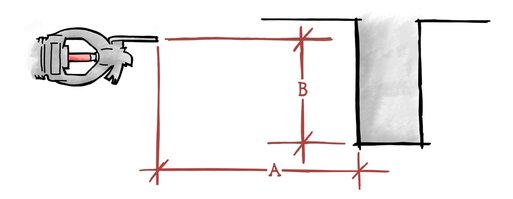
Horizontal Distance “A”: Edge of obstruction to sprinkler centerline (plan view).

Vertical Distance “B”: Bottom of obstruction to sprinkler deflector elevation (positive downward).

Sprinkler Type: Determines which NFPA table/limits apply.

Edition: NFPA 13 year; sections differ by edition.

Units: US (in/ft) or SI (mm). DXF and PNG exports honor your selection.

See something off or have a suggestion for improvement?

Email us at [email protected].

Sponsor

Free Access to this Tool
Courtesy of This Month’s Sponsor

Picture
​Home
Our Cause
The Blog
The Forum
PE Exam Prep
The Toolkit

MeyerFire University
​Pricing
Login
​Support
Contact Us
Picture

MeyerFire.com is a startup community built to help fire protection professionals shine.
Our goal is to improve fire protection practices worldwide. We promote the industry by creating helpful tools and resources, and by bringing together industry professionals to share their expertise.

​MeyerFire, LLC is a NICET Recognized Training Provider and International Code Council Preferred Education Provider.

All text, images, and media ​Copyright © 2016-2025 MeyerFire, LLC

We respect your privacy and personal data. See our Privacy Policy and Terms of Service. 
The views, opinions, and information found on this site represent solely the author and do not represent the opinions of any other party, nor does the presented material assume responsibility for its use. Fire protection and life safety systems constitute a critical component for public health and safety and you should consult with a licensed professional for proper design and code adherence.

Discussions are solely for the purpose of peer review and the exchange of ideas. All comments are reviewed. Comments which do not contribute, are not relevant, are spam, or are disrespectful in nature may be removed. Information presented and opinions expressed should not be relied upon as a replacement for consulting services. Some (not all) outbound links on this website, such as Amazon links, are affiliate-based where we receive a small commission for orders placed elsewhere.

  • Blog
  • Forum
  • TOOLKIT
    • ALL TOOLS
    • BUY THE TOOLKIT
  • UNIVERSITY
    • ALL COURSES
    • JOIN THE UNIVERSITY
  • PE Exam
    • PE Forum & Errata
    • PE Store
    • PE Tools
    • PE PREP SERIES
    • PE Old Questions
  • STUDENTS
    • LAND JOB/INTERNSHIPS
    • STUDENT CONNECTOR
  • LOGIN
    • TOOLKIT-ONLY LOGIN
    • UNIVERSITY LOGIN
  • STORE
  • OUR CAUSE
    • ABOUT MEYERFIRE
    • JOB OPENINGS
    • BECOME AN INSTRUCTOR
    • HELP/SUPPORT