
MeyerFire
  • Blog
  • Forum
  • TOOLKIT
    • ALL TOOLS
    • BUY THE TOOLKIT
  • UNIVERSITY
    • ALL COURSES
    • JOIN THE UNIVERSITY
  • PE Exam
    • PE Forum & Errata
    • PE Store
    • PE Tools
    • PE PREP SERIES
    • PE Old Questions
  • LOGIN
    • TOOLKIT-ONLY LOGIN
    • UNIVERSITY LOGIN
  • STORE
  • OUR CAUSE
    • ABOUT MEYERFIRE
    • JOB OPENINGS
    • BECOME AN INSTRUCTOR
    • HELP/SUPPORT
Picture

Is it OK to Remove a Fire Pump from Building?

4/4/2024

13 Comments

 
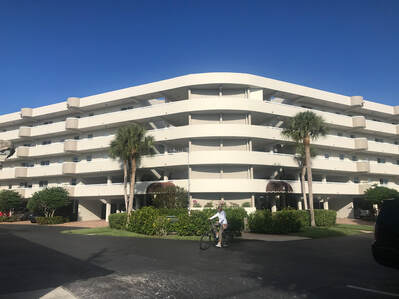
I am a President of Board of a 4-story condo building. The building was built in 1982 and is concrete block.

We received permission from fire marshal several years ago to remove all our fire hoses. The fire department told us that if there was a fire they would not use them. They would hook up to the FDC in front of our building.

My question is - what is the purpose of the building's fire pump, and can we petition to also have it removed?
Picture
Sent in anonymously for discussion. Click Title to View | Submit Your Question | Subscribe
13 Comments
Pete H
4/4/2024 07:10:32 am

Don't get rid of the pump, they didn't tell you to get rid of the standpipe, the pump probably provides adequate flow and pressure for your standpipe system.

Don't get rid of the pump, decent odds your fire sprinkler system is in combination with your standpipe system or at least also fed off the fire pump and likely calculated and sized with the expectation of the fire pump to be active.

Additionally, fire hose connections off your standpipe are discharge, piping, the FDC is suction piping. They'd connect to the FDC to provide additional flow in your standpipe and system, not feed their hoses.

Reply
Anthony P
4/4/2024 08:16:38 am

Not sure which way to approach this. Getting rid of a Fire Pump (assuming this means it's a combination system) hurts your sprinkler system. Kinda also guessing by this it isn't being tested/serviced? Is the building sprinklered?

I'm based in New York which follows older NFPAs but typically we do not install Hoses with our Fire Hose Valves because as you said the Fire Department brings their own.

The purpose of a Fire Pump is to increase the water pressure when the water source does not have adequate pressure to supply the system. (Google Search Answer :p)

Without running calculations to see the demand you never really will know. Also, its Life Safety. God Forbid something happens in the building like a fire and it comes to light that the Fire Pump was removed. Thats a battle I wouldn't want to have.

Reply
Dan Wilder
4/4/2024 08:06:41 am

Without seeing the actual language of the allowance, this is conjecture and some assumptions however:

It sounds like you have is at least a Class II standpipe system utilizing 1½" hose "stations" (1½" hose valve and the 1½" hose, hung folded or on a reel), possibly fed by a pipe as small as 1". This could also be a Class III system that uses 2½ hose valves (no attached hose) in addition to the 1½" stations. The intended use was for trained onsite personnel and/or the fire department for initial attack and subsequent cleanup operations for a fire incident and yes, most fire departments do not use these anymore and allow removal of the hoses and possibly the valves (depending on the Class of standpipe)

Your local Fire Department is allowing the removal of "fire hose stations" and possible the "1½" fire hose valves" but not the 2½ hose valves nor the standpipe system and definitely not the fire pump.

The fire pump should have two possible uses, supplementing the fire sprinkler system to achieve the required pressures of the sprinkler systems and secondary, providing what was the minimum requirement for 100GPM at 65PSI at the fire hose station.

Removal of the fire pump could have a critical impact to the ability of the fire sprinkler system to maintain minimum required sprinkler system pressures and it would be highly unlikely to be allowed to be removed. There is likely an ITM company for your property, they should be able to provide basic guidance in these matters or feel free to reach out to International Fire Protection*, National Fire Protection*, or Wayne Automatic for some high-level answers.

*Disclaimer-These are both sister companies whom I work for under the APi Group umbrella.
I also know a couple guys from Wayne Automatic and they are a strong presence in the Florida fire sprinkler community.
 
https://www.meyerfire.com/blog/standpipes-for-fire-suppression-an-introduction

https://www.firehouse.com/community-risk/article/10503421/back-to-basics-standpipe-systems

Reply
Anthony P
4/4/2024 08:20:33 am

Good job covering all you base. There's so much to cover with something like this.

Reply
S
4/4/2024 09:32:48 am

In the Clearwater/St. Petersburg/Tampa area they are allowing fire pumps to be removed all over the place. I agree with you, very bad idea! but the Fire Marshals and Inspectors are allowing it as long as the building height requirement is met.

Reply
Glenn Berger
4/4/2024 08:19:32 am

Your question did not not inform us if there was an automatic sprinkler system installed. Also we would know if the standpipe is an Automatic or Manual Class I standpipe System. Agree that there should never be fire hoses provided for occupant or fire department use.

Reply
Jack G
4/4/2024 09:04:53 am

I would not get rid of any fire protection based on AHJ.
First of all there is a form required to do it.
Then, you might only be doing this ( hoa board) to reduce the cost of inspections.
The building looks higher than 30 feet to the 4 th floor. So probably 2,5 inch valves.
The pump as indicated is for your sprinkler system and standpipe system.
Removal of class 2 hose valves would be ok. I would add 2.5 x 1.5 quick disconnect reducers to maintain code compliance.
Your INSURANCE company should be brought into the loop. You probably are getting a reduced rate for your system, as it was originally.
Altering it could affect their payout to you , or whether they insure you.
As I said — do not do it because of required inspections. You could train your maintenance man todo some of what’s required.

Reply
Jesse
4/4/2024 10:15:17 am

My first reaction is that this would a really bad idea. I'm curious to know if the building is protected by automatic sprinklers or not. The FM is right; the firefighters would never use the standpipe hose. But the fire pump is what gets the water to the automatic sprinklers and / or the standpipe outlets.

Reply
Casey Milhorn
4/4/2024 10:18:17 am

As others have said, do not get rid of the fire pump unless you have covered all the bases. I would plan on $20k minimum of engineering analysis by a Fire Protection Engineer, in consultation with a local fire sprinkler contractor. There will also be some cost to actually remove it and reconnect everything. Be warned, that the engineering analysis is likely to be money down the drain. It's a good bet that the original fire sprinkler system design was subsidized with the fire pump.

Reply
A Wiseman
4/4/2024 04:33:39 pm

Keep the fire pump! It is needed it to provide the water pressure required to serve the fire protection sprinkler system. If you remove the pump, the sprinkler system will not be able to put out a fire in the building. The fire marshal isn't going to allow the pump to be removed unless you can prove the existing sprinkler system can work without it. More than likely, it will not.

Removing the fire hoses is comparable to removing your tonsils - but removing the fire pump is comparable to removing your heart.

Reply
Tom Reinhardt
4/5/2024 05:18:06 am

NO.

Reply
James Art, FIre Protection Engineer
4/9/2024 01:33:58 pm

Good Old Days-Good Old Boy Fire Protection
By James E. Art

The story you are about to read is true; the names have been omitted to protect the innocent, (and some people who should have known better!)
Also, the Statute of Limitations has probably expired. My name is James Art. I’m a Fire Protection Engineer.
This takes place in the mid ‘70’s. (I’m not old - I’m experienced!)
I came from California to evaluate an old downtown high rise office building in a large city in a very large southern central border state. The building was unusual: Originally it was built as a three story building, with a tall “monumental” first floor, like a bank building. Then two more stories added, and later another five, making it a total of about 10 stories tall.

Just the facts, ma’am:
The owner was a large insurance company, which in those days meant huge amounts of paper files sideways on long open shelves, like some medical practices. I was concerned to see that the fire doors to the stairs had been blocked open, in this mostly unsprinklered building, to help the clerks carrying heavy loads of file folders.

The large basement was primarily a print shop and shipping operation, also full of paper plus machinery. This part of the building did have fire sprinklers. Inadvertently, I said: “The pipe is all half inch!” My guide, the Chief Engineer, said: “Well, all the sprinklers are half inch!” , which was true. Those sprinklers were nearly useless.

Then I noticed the concrete basement floor was raised in one area. It was up about 5 inches, in a rectangle about eight foot by ten feet, and boxes of copy paper had been stacked on the raised section. I looked up and saw an amazing welded galvanized pipe fitting. Starting with a flanged 8 inch outlet, this assembly consisted of several elbows, and some piping, and went diagonally under some ducts, over and around, and finally back up to tie into another 8 inch flanged outlet.
There were two parallel 8 inch screwed pipes that this connected together.

As I wondered what this was (I am an Engineer), suddenly it flashed: Missing Fire Pump.
Sure enough, the two pipes went all the way back to the fire “riser”, a horizontal pipe coming in thru the basement wall, and were tied in on either side of a check valve. The gauges showed about 40 psi in the basement.

I asked Mr. Chief Engineer, and he said: “ Yes, the old fire pump had been removed, as it needed maintenance.” He said all was been done under permit, and with written permission of the Fire Prevention Bureau (FPB).
He’d be happy to show me the documentation.

(They could have just abandoned and capped off the pipes, did not need to spend what was probably thousands of dollars to go around a check valve!)

In his office, filed properly, he had a letter asking the FPB for permission. They replied he needed to have an Engineer verify that there was at least 35 psi at the roof.

I assume this was for the standpipes, where today’s codes call for 100 psi, enough to account for loss in the hose, and still operate an adjustable fog nozzle. But in those days 65 psi was code, and 35 might’ve been enough for a straight stream.

Then he had a letter from a local Mechanical Engineer, saying there was 35 psi at the roof, and finally another letter from the FPB giving their permission to remove the fire pump.

I wondered how 35 psi was possible, given the height of the building, and the Chief Engineer offered to show me: There, on the roof, on an air conditioning unit, was an inch and a half gauge showing about 35 psi!
The fire standpipes would not have worked, even if several upper outlets in the stairwell were not found open, unless perhaps supplemented by the responding engine at an inlet.

I will not go into the sad stories of the fire alarms, and other fire features, but there is a moral to this story:

In those days, very often the FPB was staffed with firefighters on temporary light duty, or sometimes officers passing through, on their way to promotion to a higher rank.
There is a lot to learn about the Building Codes, Fire Codes, alarms, sprinklers and standpipes. A wrong call can make a big difference in a fire, that doesn’t show up until then. And not all Good Old Boy Engineers actually know fire protection details. The FPB should understand what they are approving.

I strongly recommend FPB people be properly trained. “Uniformed” should NOT mean Un-Informed.
Hopefully, today’s FPB personnel are more knowledgeable, better trained, and would not approve such a thing.


About the Author:
James E. Art is a Registered Fire Protection Engineer, with over 25 years of experience. A graduate of the Illinois Institute of Technology Fire Protection Engineering program, he does expert witness work; design review and inspection for cities, architects, engineers; code consulting; Hi Piled Storage Fire Code Report

Reply
Ricardo Gonzales Jr
4/18/2024 09:45:56 am

The answer is really simple. Have you had a Fire Protection Engineer do the analysis of the system to see IF the pump is needed? i.e. review the original design drawings and compare that to existing supply lines. If not, the word of the 'Selective Amnesia' Fire Marshal holds no water in a court situation. If a fire occurred in the complex and the sprinkler or standpipe didn't perform, the Fire Marshal would be the 1st to cite the HOA and person do made the decision then followed by lawsuits. Not worth the financial risk or jail time without a serious Engineering Analysis.

Reply


Leave a Reply.

    SUBMIT A QUESTION
    Picture
    Why Sponsor?

    ALL-ACCESS

    Picture
    GET ALL OUR TOOLS

    SUBSCRIBE

    Subscribe and learn something new each day:
    I'm Interested In:

    COMMUNITY

    Top Dec '25 Contributors
    Picture
    Picture
    Picture
    Picture
    Picture
    Picture
    Picture
    Picture
    Picture
    Picture
    SEE LEADERBOARD

    YOUR POST

    SUBMIT A QUESTION

    PE EXAM

    Get 100 Days of Free Sample Questions right to you!
    SIGN ME UP!

    FILTERS

    All
    A1171
    ABA
    ADA
    ASCE 7
    ASME A17.1
    ASTM E1354
    Blog Thread
    Daily Discussion
    Design-documents
    EN 12259-1
    EN 12845
    Explosion Protection
    Explosion-protection-prevention
    Fire Detection And Alarm Systems
    Fire Dynamics
    Flammable And Combustible Liquids
    Flammable-combustible-liquids
    FM Global
    Human-behavior
    IBC
    ICC 500
    IEBC
    IFC
    IMC
    IPC
    IRC
    ISO
    Means Of Egress
    NBC
    NFPA 1
    NFPA 10
    NFPA 101
    NFPA 11
    NFPA 110
    NFPA 1142
    NFPA 1221
    NFPA 13
    NFPA 13D
    NFPA 13R
    NFPA 14
    NFPA 15
    NFPA 16
    NFPA 17A
    NFPA 20
    NFPA 2001
    NFPA 214
    NFPA 22
    NFPA 220
    NFPA 24
    NFPA 241
    NFPA 25
    NFPA 291
    NFPA 30
    NFPA 307
    NFPA 30B
    NFPA 31
    NFPA 33
    NFPA 37
    NFPA 400
    Nfpa-409
    Nfpa-415
    Nfpa-45
    Nfpa-495
    NFPA 497
    NFPA 5000
    NFPA 502
    NFPA 54
    NFPA 55
    NFPA 654
    NFPA 68
    NFPA 70
    NFPA 701
    NFPA 72
    NFPA 75
    NFPA 770
    NFPA 82
    NFPA 850
    NFPA 855
    NFPA 90A
    NFPA 92
    NFPA 96
    NICET
    OBC
    OSHA
    Passive Building Systems
    PE Prep Guide
    PE Prep Series
    PE Sample Problems
    Poll
    Smoke Management
    Special Hazard Systems
    UFC 3-600-01
    UFC 4-021-01
    UFC 4-211-01
    UPC
    Updates
    Water Based Fire Suppression
    Weekly Exams


    ARCHIVES

    January 2026
    December 2025
    November 2025
    October 2025
    September 2025
    August 2025
    July 2025
    June 2025
    May 2025
    April 2025
    March 2025
    February 2025
    January 2025
    December 2024
    November 2024
    October 2024
    September 2024
    August 2024
    July 2024
    June 2024
    May 2024
    April 2024
    March 2024
    February 2024
    January 2024
    December 2023
    November 2023
    October 2023
    September 2023
    August 2023
    July 2023
    June 2023
    May 2023
    April 2023
    March 2023
    February 2023
    January 2023
    December 2022
    November 2022
    October 2022
    September 2022
    August 2022
    July 2022
    June 2022
    May 2022
    April 2022
    March 2022
    February 2022
    January 2022
    December 2021
    November 2021
    October 2021
    September 2021
    August 2021
    July 2021
    June 2021
    May 2021
    April 2021
    March 2021
    February 2021
    January 2021
    December 2020
    November 2020
    October 2020
    September 2020
    August 2020
    July 2020
    June 2020
    May 2020
    April 2020
    March 2020
    February 2020
    January 2020
    December 2019
    November 2019
    October 2019
    September 2019
    August 2019
    July 2019
    June 2019
    May 2019
    April 2019
    March 2019
    February 2019
    January 2019
    December 2018
    November 2018
    October 2018
    September 2018
    August 2018
    July 2018
    June 2018
    May 2018
    November 2017
    October 2017
    September 2017
    August 2017
    July 2017
    June 2017
    November 2016
    October 2016
    July 2016
    June 2016


    PE PREP SERIES

    SEE LEADERBOARD

    SEARCH THE FORUM

    RSS Feed

Picture
​Home
Our Cause
The Blog
The Forum
PE Exam Prep
The Toolkit

MeyerFire University
​Pricing
Login
​Support
Contact Us
Picture

MeyerFire.com is a startup community built to help fire protection professionals shine.
Our goal is to improve fire protection practices worldwide. We promote the industry by creating helpful tools and resources, and by bringing together industry professionals to share their expertise.

​MeyerFire, LLC is a NICET Recognized Training Provider and International Code Council Preferred Education Provider.

All text, images, and media ​Copyright © 2016-2025 MeyerFire, LLC

We respect your privacy and personal data. See our Privacy Policy and Terms of Service. 
The views, opinions, and information found on this site represent solely the author and do not represent the opinions of any other party, nor does the presented material assume responsibility for its use. Fire protection and life safety systems constitute a critical component for public health and safety and you should consult with a licensed professional for proper design and code adherence.

Discussions are solely for the purpose of peer review and the exchange of ideas. All comments are reviewed. Comments which do not contribute, are not relevant, are spam, or are disrespectful in nature may be removed. Information presented and opinions expressed should not be relied upon as a replacement for consulting services. Some (not all) outbound links on this website, such as Amazon links, are affiliate-based where we receive a small commission for orders placed elsewhere.

  • Blog
  • Forum
  • TOOLKIT
    • ALL TOOLS
    • BUY THE TOOLKIT
  • UNIVERSITY
    • ALL COURSES
    • JOIN THE UNIVERSITY
  • PE Exam
    • PE Forum & Errata
    • PE Store
    • PE Tools
    • PE PREP SERIES
    • PE Old Questions
  • LOGIN
    • TOOLKIT-ONLY LOGIN
    • UNIVERSITY LOGIN
  • STORE
  • OUR CAUSE
    • ABOUT MEYERFIRE
    • JOB OPENINGS
    • BECOME AN INSTRUCTOR
    • HELP/SUPPORT