MeyerFire
  • Blog
  • Forum
  • TOOLKIT
    • ALL TOOLS
    • BUY THE TOOLKIT
  • UNIVERSITY
    • ALL COURSES
    • JOIN THE UNIVERSITY
  • PE Exam
    • PE Forum & Errata
    • PE Store
    • PE Tools
    • PE PREP SERIES
    • PE Old Questions
  • STUDENTS
    • LAND JOB/INTERNSHIPS
    • STUDENT CONNECTOR
  • LOGIN
    • TOOLKIT-ONLY LOGIN
    • UNIVERSITY LOGIN
  • STORE
  • OUR CAUSE
    • ABOUT MEYERFIRE
    • JOB OPENINGS
    • BECOME AN INSTRUCTOR
    • HELP/SUPPORT
Picture

Does Fire Separation Negate Need for Sprinklers?

1/30/2024

10 Comments

 
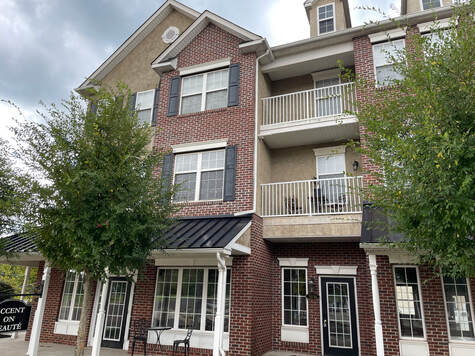
I purchased a commercial condo recently. It’s been vacant and unfinished since 2013. It’s a shell, picture is below. It has 5 residential condos on top and 5 commercial condos on first floor, in a 3 story building. All residential units were sold and have been occupied since. One commercial unit was also built and has been occupied as a salon with a U & O.
Picture
There are no sprinklers, no fire room. They were going off of 2006 IBC code.

My architect prepared stamped plans with no sprinklers using the separated building scenario. It has a 2-hour horizontal separation, 3-5 hour vertical, no access to second floors. The plan was denied for sprinklers to be installed.

Now, I certainly understand safety, but it’s almost impossible to install now after 12 years.

Can you help me decipher mixed use B (1st floor) and R-3 (2nd and 3rd one unit)?

Is this approach allowed by code, or is the code official correct?

Is a self-contained fire area allowed to be its own building?

Please help, thanks.

​​​​​​​​​​​​​​​​​​​​​​​​​Sent in anonymously for discussion. Click Title to View | Submit Your Question | Subscribe
10 Comments
Pete H
1/30/2024 06:40:28 am

What's the square footage per floor?

Reply
Henry
1/30/2024 08:18:03 am

The IBC requires a sprinkler system to be installed throughout a the entire building with a R occupancy - note it says "entire building"...now if you provide the appropriate fire walls or horizontal separation you may get out of sprinklering the lower commercial space but not the upstairs...the code also allows any legally conforming structure to remain in service so if it was designed legally at the time and you do not change the use or occupancy it would still be compliant.

Reply
Todd E Wyatt
1/30/2024 09:09:21 am

First, hire a Design Professional (e.g. Architect and/or Fire Protection engineer) to evaluate the initial plan review and permitting process and to evaluate the existing conditions (e.g. Occupancy Classifications) to determine if the original approval is still valid.

The Design Professional should first review the Certificate of Occupancy (see REFERENCES) issued for the building (year? 2013?). The CO will identify the initial “use and occupancy” (e.g. Group B Business & Group R-2, not R-3) and “whether the sprinkler system is required” (see 111.2). If the building was in compliance with the adopted Code (e.g. IBC-2006) at the time of the CO issuance and the building’s “use and occupancy” has not been changed since, then it is still in compliance regardless of the adoption of newer Codes since then.

Your description has conflicting information … “It’s been vacant and unfinished since 2013. It’s a shell … All residential units were sold and have been occupied since.” When were the residential units “occupied?” 2013? Establishing an “occupied” timeline will aid the AHJ (Authority Having Jurisdiction) in determining its current compliance. IBC-2021 gives the AHJ the authority to evaluate the “general safety and welfare of the occupants and the public” per 102.6.2 Buildings Previously Occupied.

Assuming the residential dwelling units (Group R-3) on Stories 02 & 03 have been occupied since the CO was issued (or since 2013) and the commercial (Group B) has been vacant, evaluating the compliance of the Group R Residential fire area is as follows :

IBC-2006
903.2.8 Group R
An automatic sprinkler system installed in accordance with Section 903.3 shall be provided throughout all buildings with a Group R fire area.

IBC-2021
903.2.8 Group R
An automatic sprinkler system installed in accordance with Section 903.3 shall be provided throughout all buildings with a Group R fire area.

This requirement to provide an automatic sprinkler systems (ASPS) “throughout all buildings with a Group R fire area” has gone unchanged from IBC-2006 to IBC-2021.

An option to meet this ASPS requirement is to get the AHJ to agree to using IBC-2021 510.2 Horizontal Building Separation Allowance (see REFERENCES) to create “separate and distinct buildings” between Story 01 (Group B, no ASPS) from Stories 02-03 (Group R-3, ASPS) with the use of a 3-Hr horizontal assembly (3HA). 510.2’s purpose is for “determining area limitations, continuity of fire walls, limitation of number of stories and type of construction” and not for creating separate buildings so an ASPS is not required for a portion of the building but the AHJ may consider it if additional safety features are added.

Reply
Todd E Wyatt
1/30/2024 09:09:53 am

REFERENCES
IBC-2021

Section 102 Applicability
102.6 Existing Structures
The legal occupancy of any structure existing on the date of adoption of this code shall be permitted to continue without change, except as otherwise specifically provided in this code, the International Existing Building Code, the International Property Maintenance Code or the International Fire Code.
102.6.1 Buildings Not Previously Occupied
A building or portion of a building that has not been previously occupied or used for its intended purpose in accordance with the laws in existence at the time of its completion shall comply with the provisions of this code or the International Residential Code, as applicable, for new construction or with any current permit for such occupancy.
102.6.2 Buildings Previously Occupied
The legal occupancy of any building existing on the date of adoption of this code shall be permitted to continue without change, except as otherwise specifically provided in this code, the International Fire Code or International Property Maintenance Code, or as is deemed necessary by the building official for the general safety and welfare of the occupants and the public.

Section 111 Certificate of Occupancy
111.1 Change of Occupancy
A building or structure shall not be used or occupied in whole or in part, and a change of occupancy of a building or structure or portion thereof shall not be made, until the building official has issued a certificate of occupancy therefor as provided herein. Issuance of a certificate of occupancy shall not be construed as an approval of a violation of the provisions of this code or of other ordinances of the jurisdiction. Certificates presuming to give authority to violate or cancel the provisions of this code or other ordinances of the jurisdiction shall not be valid.
Exception: Certificates of occupancy are not required for work exempt from permits in accordance with Section 105.2.

111.2 Certificate Issued
After the building official inspects the building or structure and does not find violations of the provisions of this code or other laws that are enforced by the department, the building official shall issue a certificate of occupancy that contains the following:
1. The permit number.
2. The address of the structure.
3. The name and address of the owner or the owner's authorized agent.
4. A description of that portion of the structure for which the certificate is issued.
5. A statement that the described portion of the structure has been inspected for compliance with the requirements of this code.
6. The name of the building official.
7. The edition of the code under which the permit was issued.
8. The use and occupancy, in accordance with the provisions of Chapter 3.
9. The type of construction as defined in Chapter 6.
10. The design occupant load.
11. Where an automatic sprinkler system is provided, whether the sprinkler system is required.
12. Any special stipulations and conditions of the building permit.

111.4 Revocation
The building official is authorized to suspend or revoke a certificate of occupancy or completion issued under the provisions of this code, in writing, wherever the certificate is issued in error, or on the basis of incorrect information supplied, or where it is determined that the building or structure or portion thereof is in violation of the provisions of this code or other ordinance of the jurisdiction.

Chapter 9 Fire Protection and Life Safety Systems
Section 903 Automatic Sprinkler Systems
903.2 Where Required
903.2.8 Group R
An automatic sprinkler system installed in accordance with Section 903.3 shall be provided throughout all buildings with a Group R fire area.
903.3 Installation Requirements
903.3.1.2 NFPA 13R Sprinkler Systems
Automatic sprinkler systems in Group R occupancies shall be permitted to be installed throughout in accordance with NFPA 13R where the Group R occupancy meets all of the following conditions:
1. Four stories or fewer above grade plane.
2. The floor level of the highest story is 30 feet (9144 mm) or less above the lowest level of fire department vehicle access.
3. The floor level of the lowest story is 30 feet (9144 mm) or less below the lowest level of fire department vehicle access.
4. The number of stories of Group R occupancies constructed in accordance with Sections 510.2 and 510.4 shall be measured from grade plane.

Chapter 5 General Building Heights and Areas
Section 510 Special Provisions
510.2 Horizontal Building Separation Allowance
A building shall be considered as separate and distinct buildings for the purpose of determining area limitations, continuity of fire walls, limitation of number of stories and type of construction where the following conditions are met:
1. The buildings are separated with a horizontal assembly having a fire-resistance rating of not less than 3 hours. Where vertical offsets are provided as part of a horizontal assembly, the vertical offset and the structure supporting the vertical offs

Reply
Todd E Wyatt
1/30/2024 09:10:26 am

1. The buildings are separated with a horizontal assembly having a fire-resistance rating of not less than 3 hours. Where vertical offsets are provided as part of a horizontal assembly, the vertical offset and the structure supporting the vertical offset shall have a fire-resistance rating of not less than 3 hours.
2. The building below, including the horizontal assembly, is of Type IA construction.
3. Shaft, stairway, ramp and escalator enclosures through the horizontal assembly shall have not less than a 2-hour fire-resistance rating with opening protectives in accordance with Section 716.
Exception: Where the enclosure walls below the horizontal assembly have not less than a 3-hour fire-resistance rating with opening protectives in accordance with Section 716, the enclosure walls extending above the horizontal assembly shall be permitted to have a 1-hour fire-resistance rating, provided that the following conditions are met:
a. The building above the horizontal assembly is not required to be of Type I construction.
b. The enclosure connects fewer than four stories.
c. The enclosure opening protectives above the horizontal assembly have a fire protection rating of not less than 1 hour.
4. Interior exit stairways located within the Type IA building are permitted to be of combustible materials where the following requirements are met:
a. The building above the Type IA building is of Type III, IV, or V construction.
b. The stairway located in the Type IA building is enclosed by 3-hour fire-resistance-rated construction with opening protectives in accordance with Section 716.
5. The building or buildings above the horizontal assembly shall be permitted to have multiple Group A occupancy uses, each with an occupant load of less than 300, or Group B, M, R or S occupancies.
6. The building below the horizontal assembly shall be protected throughout by an approved automatic sprinkler system in accordance with Section 903.3.1.1, and shall be permitted to be any occupancy allowed by this code except Group H.
7. The maximum building height in feet (mm) shall not exceed the limits set forth in Section 504.3 for the building having the smaller allowable height as measured from the grade plane.

Greg
1/30/2024 09:27:05 am

This reply is without opening any of the NFPA 13 and 13 (letter) standards, .... and assuming the technical still holds on this data, but wouldn't the least expensive sprinkler installation be a retrofit-exposed CPVC ? Possibly, a variance to get to this concept to get cost vs. safety aligned...

I'm referring to the NIST report NISTIR 5339, Comparison of Fire Sprinkler Piping Materials: Steel, Copper, Chlorinated
Polyvinyl Chloride and Poiybutyiene, in Residential
and Light Hazard Installations,

Which states, "According to the April, 1992 UL guide card in [28], CPVC pipe and fittings may be installed without ceiling protection (exposed) when subject to certain limitations. These limitations require that:
1) exposed piping be installed below a smooth, flat, horizontal ceiling, and
2) listed quick response pendent sprinklers have deflectors installed within 203 m
(8.0 in) from the ceiling or listed residential pendent sprinklers be located in accordance with their listing and at a maximum distance between sprinklers not to exceed 4.57 m (15 ft), or
3) listed quick-response horizontal sidewall sprinklers have deflectors installed within 152 mm (6.0 in) from the ceiling and within 102 mm (4.0 in) from the sidewall or listed residential horizontal sidewall sprinklers be located in accordance with their listing and a maximum distance between sprinklers not to exceed 4.27 m (14.0

Reply
Greg
1/30/2024 09:41:54 am

Website reference for the above NIST report.

https://nvlpubs.nist.gov/nistpubs/Legacy/IR/nistir5339.pdf

Reply
Greg
1/31/2024 08:28:51 am

There is an assumption being made in the original question,

"it’s almost impossible to install now after 12 years."

If it is actually impossible, then there is justification for the code work-around that is being described by a number of comments.

However, a hard-number that reflects the actual dollar amount to complete a typical sprinkler system is more compelling in presenting the hardship and could be the central talking point with the AHJ.

If there is not any relief provided by the AHJ for sprinklers and the aesthetic appeal of hidden pipes and recessed heads is cost prohibitive, the lowest possible cost installation might need to be explored with exposed pipe. That being said, the material and installed cost of CPVC might be a solution if sprinklers are determined to be necessary by the AHJ.

Reply
Pete
1/30/2024 10:27:48 am

I see several IBC and relevant modern code citations, but I didn't see IEBC comments. This will depend on your jurisdiction, but if the building was compliant when it was built under 2006 IBC, and assuming you're doing renovations to the residential and tenant infills to the commercial, if your proposed work is limited to Level 1 alterations, which is basically cosmetic only (without changes to the common corridors, stairs, common egress travel path, or without changing major equipment [ I believe making an allowance for like-for-like equipment replacement]), you are not required to update fire protection to the current IBC. This is a generality and largely dependent on whether your jurisdiction has adopted/ allows permit applications under IEBC. If they do allow it, it may drastically alter your plans, but it would certainly be cheaper to go back to the design board than to retrofit sprinklers. You would need to do the cost-savings analysis on how the diminished design would impact the profitability of the property. If you do decide to install fire protection, I know there are listed residential sidewall sprinkler systems designed to retrofit CPVC pipe behind the crown molding. Exposed pendent systems are an option for the commercial space. These options need to be discussed with your design pro/ sprinkler contractor.

Reply
Mike link
1/30/2024 12:32:01 pm

Need more information whether the shell had a final co.
If interior was accomplished without individual permits and no shell final this would be a problem.
Very possible the original plans were improperly approved.
It’s not uncommon that the architect, and building/ fire plans review have all missed major requirements and the inspector finds the problem.
As an inspector I have seen this all too many times, it’s unfortunate but it happens.

Reply


Leave a Reply.

    SUBMIT A QUESTION
    Picture
    Why Sponsor?

    ALL-ACCESS

    Picture
    GET ALL OUR TOOLS

    SUBSCRIBE

    Subscribe and learn something new each day:
    I'm Interested In:

    COMMUNITY

    Top May '26 Contributors
    Picture
    Picture
    Picture
    Picture
    Picture
    Picture
    Picture
    Picture
    Picture
    Picture
    SEE LEADERBOARD

    YOUR POST

    SUBMIT A QUESTION

    PE EXAM

    Get 100 Days of Free Sample Questions right to you!
    SIGN ME UP!

    FILTERS

    All
    A1171
    ABA
    ADA
    ASCE 7
    ASME A17.1
    ASTM E1354
    Blog Thread
    Daily Discussion
    Design-documents
    EN 12259-1
    EN 12845
    Explosion Protection
    Explosion-protection-prevention
    Fire Detection And Alarm Systems
    Fire Dynamics
    Flammable And Combustible Liquids
    Flammable-combustible-liquids
    FM Global
    Human-behavior
    IBC
    ICC 500
    IEBC
    IFC
    IMC
    IPC
    IRC
    ISO
    Means Of Egress
    NBC
    NFPA 1
    NFPA 10
    NFPA 101
    NFPA 11
    NFPA 110
    NFPA 1142
    NFPA 1221
    NFPA 13
    NFPA 13D
    NFPA 13R
    NFPA 14
    NFPA 15
    NFPA 16
    NFPA 17A
    NFPA 20
    NFPA 2001
    NFPA 214
    NFPA 22
    NFPA 220
    NFPA 24
    NFPA 241
    NFPA 25
    NFPA 291
    NFPA 30
    NFPA 307
    NFPA 30B
    NFPA 31
    NFPA 33
    NFPA 37
    NFPA 400
    Nfpa-409
    Nfpa-415
    Nfpa-45
    Nfpa-495
    NFPA 497
    NFPA 5000
    NFPA 502
    NFPA 54
    NFPA 55
    NFPA 654
    NFPA 68
    NFPA 70
    NFPA 701
    NFPA 72
    NFPA 75
    NFPA 770
    NFPA 82
    NFPA 850
    NFPA 855
    NFPA 90A
    NFPA 92
    NFPA 96
    NICET
    OBC
    OSHA
    Passive Building Systems
    PE Prep Guide
    PE Prep Series
    PE Sample Problems
    Poll
    Smoke Management
    Special Hazard Systems
    UFC 3-600-01
    UFC 3-601-02
    UFC 4-021-01
    UFC 4-211-01
    UPC
    Updates
    Water Based Fire Suppression
    Weekly Exams


    ARCHIVES

    June 2026
    May 2026
    April 2026
    March 2026
    February 2026
    January 2026
    December 2025
    November 2025
    October 2025
    September 2025
    August 2025
    July 2025
    June 2025
    May 2025
    April 2025
    March 2025
    February 2025
    January 2025
    December 2024
    November 2024
    October 2024
    September 2024
    August 2024
    July 2024
    June 2024
    May 2024
    April 2024
    March 2024
    February 2024
    January 2024
    December 2023
    November 2023
    October 2023
    September 2023
    August 2023
    July 2023
    June 2023
    May 2023
    April 2023
    March 2023
    February 2023
    January 2023
    December 2022
    November 2022
    October 2022
    September 2022
    August 2022
    July 2022
    June 2022
    May 2022
    April 2022
    March 2022
    February 2022
    January 2022
    December 2021
    November 2021
    October 2021
    September 2021
    August 2021
    July 2021
    June 2021
    May 2021
    April 2021
    March 2021
    February 2021
    January 2021
    December 2020
    November 2020
    October 2020
    September 2020
    August 2020
    July 2020
    June 2020
    May 2020
    April 2020
    March 2020
    February 2020
    January 2020
    December 2019
    November 2019
    October 2019
    September 2019
    August 2019
    July 2019
    June 2019
    May 2019
    April 2019
    March 2019
    February 2019
    January 2019
    December 2018
    November 2018
    October 2018
    September 2018
    August 2018
    July 2018
    June 2018
    May 2018
    November 2017
    October 2017
    September 2017
    August 2017
    July 2017
    June 2017
    November 2016
    October 2016
    July 2016
    June 2016


    PE PREP SERIES

    SEE LEADERBOARD

    SEARCH THE FORUM

    RSS Feed

Picture
​Home
Our Cause
The Blog
The Forum
PE Exam Prep
The Toolkit

MeyerFire University
​Pricing
Login
​Support
Contact Us
Picture

MeyerFire.com is a startup community built to help fire protection professionals shine.
Our goal is to improve fire protection practices worldwide. We promote the industry by creating helpful tools and resources, and by bringing together industry professionals to share their expertise.

​MeyerFire, LLC is a NICET Recognized Training Provider and International Code Council Preferred Education Provider.

All text, images, and media ​Copyright © 2016-2025 MeyerFire, LLC

We respect your privacy and personal data. See our Privacy Policy and Terms of Service. 
The views, opinions, and information found on this site represent solely the author and do not represent the opinions of any other party, nor does the presented material assume responsibility for its use. Fire protection and life safety systems constitute a critical component for public health and safety and you should consult with a licensed professional for proper design and code adherence.

Discussions are solely for the purpose of peer review and the exchange of ideas. All comments are reviewed. Comments which do not contribute, are not relevant, are spam, or are disrespectful in nature may be removed. Information presented and opinions expressed should not be relied upon as a replacement for consulting services. Some (not all) outbound links on this website, such as Amazon links, are affiliate-based where we receive a small commission for orders placed elsewhere.

  • Blog
  • Forum
  • TOOLKIT
    • ALL TOOLS
    • BUY THE TOOLKIT
  • UNIVERSITY
    • ALL COURSES
    • JOIN THE UNIVERSITY
  • PE Exam
    • PE Forum & Errata
    • PE Store
    • PE Tools
    • PE PREP SERIES
    • PE Old Questions
  • STUDENTS
    • LAND JOB/INTERNSHIPS
    • STUDENT CONNECTOR
  • LOGIN
    • TOOLKIT-ONLY LOGIN
    • UNIVERSITY LOGIN
  • STORE
  • OUR CAUSE
    • ABOUT MEYERFIRE
    • JOB OPENINGS
    • BECOME AN INSTRUCTOR
    • HELP/SUPPORT