MeyerFire
  • Blog
  • Forum
  • TOOLKIT
    • ALL TOOLS
    • BUY THE TOOLKIT
  • UNIVERSITY
    • ALL COURSES
    • JOIN THE UNIVERSITY
  • PE Exam
    • PE Forum & Errata
    • PE Store
    • PE Tools
    • PE PREP SERIES
    • PE 100-Day Marathon
  • LOGIN
    • TOOLKIT-ONLY LOGIN
    • UNIVERSITY LOGIN
  • STORE
  • OUR CAUSE
    • ABOUT MEYERFIRE
    • JOB OPENINGS
    • BECOME AN INSTRUCTOR
    • HELP/SUPPORT
Picture

What Terms Does Industry Use for Pipes? [Polls]

12/6/2023

 
A couple weeks ago I was talking with a friend (shoutout to Chris Logan and his Fire Sprinkler Podcast) about different naming conventions for specific pipes in a sprinkler system.

What a great end result that chat started! We drew it up, labeled as best we knew, and posted it last week for your input.

And boy did you not disappoint!

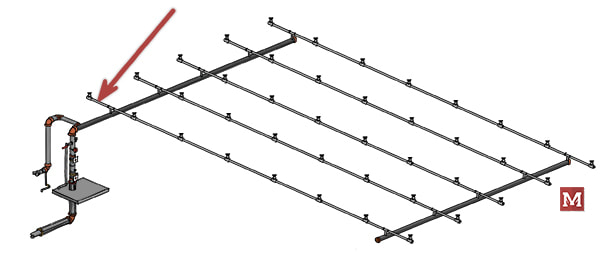
​Probably the term I knew least about was this one -
Picture
We got a wide range of names and input on how you describe the system. We can create a pretty kickin’ diagram today with your awesome input. 

But I can't help but to take it one step further.

We all have anecdotal experience, but what is the most common terms actually used in industry?

If I’m talking to a colleague across the country – what term is most likely to strike home?

I hate surveys, so I’m not going to do that. Instead, below we have simple poll questions where you can instantly see the results too. 

Vote on what term you usually call each part of the system, and afterwards we'll build a new (and more representative) diagram based on the most common terms. Keep in mind that each of these pieces don't have a defined name.

The others we covered last week (riser, system riser, feed main, cross main, branch line, armover, sprig) are all defined terms in NFPA 13.

If we do this well enough it just might be what the industry uses over the next few years, so thanks for taking part!

TERM #1

​TERM #2

​TERM #3

​TERM #4

​TERM #5
Thanks for your input & being a part of the community here!​
Greg Lay
12/6/2023 10:25:53 am

I know from experience that what region you work in has a lot to do with what we call things. A few months ago, I was talking to someone from Tennessee that calls pipe without any welds "skinny pipe" and in Chicago, we call it "bald pipe".

Dave
12/6/2023 10:52:38 am

Thanks for doing that Joe, what fun and sometimes unpredictable results! Kind of related to regions as Greg mentions, and sociolinguistics, in my area there is a shared DNA among many (but not all) local contractors and designers that can be traced to one originating pioneering company. Same with their title blocks.

Joe Meyer
12/6/2023 10:59:54 am

Yeah this is a fun one - really threw in the last 'outlet' for kicks - that may be the most regional term of any.

With remote work and less barrier to communication now, I do wonder if many of these terms haven't already gotten more consistent across the country over the last few decades.

Aaron link
12/7/2023 06:23:08 am

In virginia we call it slick pipe

James Art FPE
12/6/2023 11:27:01 am

AND lets not call them "heads".
They are "Sprinklers" or "Fire Sprinklers."
Heads are the bathrooms on ships.

OR
an indicator that a plumber is in over his head!

DAVE
12/6/2023 11:32:24 am

YES! - Finally someone who is with me on that!
Actually I read it in an article long ago, and have followed (and taught) it ever since. After all, the term "head" is virtually nonexistent in NFPA 13. (Sorry sprinkler head collectors out there.)

Franck
12/6/2023 11:34:34 am

Sprinkler “head” is s tricky one for French speaking people as in France the correct name is… Tête sprinkleur” that is literally translated into “sprinkler head”.
Note that French Canadians have a specific word for sprinkler, they call it “gicleur”.
Different countries, different nicknames…

Steven D
12/6/2023 11:42:02 am

Not a bad template for bring us all closer together with common design concepts. Common communication terms can help us get the core of a conversation faster. This could be applied quite a few areas-great work, everyone.

The underground supply is an interesting one. This tends to be a critical juncture for communicating with the Contractor. We are often conveying something to the Contractor, they are typically accustomed to being called out by civil contractors. I have tried referring to the through-slab piece using terms cited by previous GC's, but the last one was befuddled by the term spigot. Next time I will give Stub In a shot. Should be right 1 in 5 times.

sean
12/6/2023 07:48:34 pm

I would say another good one would be arm over or gooseneck.

Aaron link
12/7/2023 06:27:00 am

You mean arm over or “return bend” haha.
It is neat hearing what everyone calls things.


Comments are closed.
    Picture
    Why Sponsor?

    ALL-ACCESS

    Picture
    GET THE TOOLKIT

    SUBSCRIBE

    Get Free Articles via Email:
    + Get calculators, tools, resources and articles
    + Get our PDF Flowchart for Canopy & Overhang Requirements instantly
    Picture
    + No spam
    ​+ Unsubscribe anytime
    I'm Interested In:

    AUTHOR

    Joe Meyer, PE, is a Fire Protection Engineer out of St. Louis, Missouri who writes & develops resources for Fire Protection Professionals. See bio here: About


    FILTERS

    All
    Announcements
    Author Jocelyn Sarrantonio PE
    Book Review
    Calculators
    Career
    Course
    Delegated Design
    Design Challenge
    Detail Critique
    Fire Alarm
    Fire Events
    Fire Suppression
    Flammable & Combustible Liquids
    Flexible Drops
    Floor Control Valve
    Life Safety
    News
    NICET
    Passive Fire Protection
    PE Exam
    Perspective
    Pick A Part
    Pick-A-Part
    Products
    Site Updates
    Special Hazards
    Specifications
    Sprinkler Systems
    Standpipes
    Tools
    Videos


    ARCHIVES

    December 2025
    November 2025
    October 2025
    September 2025
    August 2025
    July 2025
    June 2025
    May 2025
    April 2025
    January 2025
    November 2024
    October 2024
    September 2024
    August 2024
    July 2024
    June 2024
    May 2024
    April 2024
    March 2024
    February 2024
    January 2024
    December 2023
    November 2023
    October 2023
    September 2023
    August 2023
    July 2023
    June 2023
    May 2023
    April 2023
    March 2023
    January 2023
    December 2022
    November 2022
    October 2022
    September 2022
    August 2022
    May 2022
    April 2022
    March 2022
    February 2022
    January 2022
    November 2021
    October 2021
    September 2021
    August 2021
    July 2021
    June 2021
    May 2021
    April 2021
    March 2021
    February 2021
    December 2020
    November 2020
    October 2020
    August 2020
    July 2020
    June 2020
    May 2020
    April 2020
    March 2020
    February 2020
    January 2020
    December 2019
    November 2019
    October 2019
    September 2019
    August 2019
    July 2019
    June 2019
    May 2019
    April 2019
    March 2019
    February 2019
    January 2019
    December 2018
    November 2018
    October 2018
    September 2018
    August 2018
    July 2018
    June 2018
    May 2018
    April 2018
    March 2018
    February 2018
    January 2018
    December 2017
    November 2017
    October 2017
    September 2017
    August 2017
    July 2017
    May 2017
    April 2017
    September 2016
    August 2016
    July 2016
    June 2016
    July 2015
    June 2015
    May 2015

    RSS Feed

Picture
​Home
Our Cause
The Blog
The Forum
PE Exam Prep
The Toolkit

MeyerFire University
​Pricing
Login
​Support
Contact Us
Picture

MeyerFire.com is a startup community built to help fire protection professionals shine.
Our goal is to improve fire protection practices worldwide. We promote the industry by creating helpful tools and resources, and by bringing together industry professionals to share their expertise.

​MeyerFire, LLC is a NICET Recognized Training Provider and International Code Council Preferred Education Provider.

All text, images, and media ​Copyright © 2016-2025 MeyerFire, LLC

We respect your privacy and personal data. See our Privacy Policy and Terms of Service. 
The views, opinions, and information found on this site represent solely the author and do not represent the opinions of any other party, nor does the presented material assume responsibility for its use. Fire protection and life safety systems constitute a critical component for public health and safety and you should consult with a licensed professional for proper design and code adherence.

Discussions are solely for the purpose of peer review and the exchange of ideas. All comments are reviewed. Comments which do not contribute, are not relevant, are spam, or are disrespectful in nature may be removed. Information presented and opinions expressed should not be relied upon as a replacement for consulting services. Some (not all) outbound links on this website, such as Amazon links, are affiliate-based where we receive a small commission for orders placed elsewhere.

  • Blog
  • Forum
  • TOOLKIT
    • ALL TOOLS
    • BUY THE TOOLKIT
  • UNIVERSITY
    • ALL COURSES
    • JOIN THE UNIVERSITY
  • PE Exam
    • PE Forum & Errata
    • PE Store
    • PE Tools
    • PE PREP SERIES
    • PE 100-Day Marathon
  • LOGIN
    • TOOLKIT-ONLY LOGIN
    • UNIVERSITY LOGIN
  • STORE
  • OUR CAUSE
    • ABOUT MEYERFIRE
    • JOB OPENINGS
    • BECOME AN INSTRUCTOR
    • HELP/SUPPORT