
MeyerFire
  • Blog
  • Forum
  • TOOLKIT
    • ALL TOOLS
    • BUY THE TOOLKIT
  • UNIVERSITY
    • ALL COURSES
    • JOIN THE UNIVERSITY
  • PE Exam
    • PE Forum & Errata
    • PE Store
    • PE Tools
    • PE PREP SERIES
    • PE Old Questions
  • LOGIN
    • TOOLKIT-ONLY LOGIN
    • UNIVERSITY LOGIN
  • STORE
  • OUR CAUSE
    • ABOUT MEYERFIRE
    • JOB OPENINGS
    • BECOME AN INSTRUCTOR
    • HELP/SUPPORT
Picture

New Fire Pump Analyzer - Your Input Needed

9/20/2018

 
Based on some feedback and good ideas I've been experimenting with graphing fire pump & flow test curves with usable data outputs. Below is the first iteration for drawing a fire pump curve alongside a water supply curve.
Picture
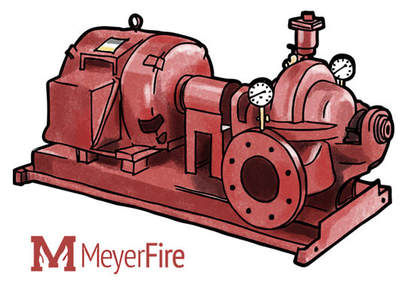
Determining ideal fire pump configurations for sprinkler and standpipe systems can be
​an important part of optimizing fire suppression design
SEE THE FIRE PUMP ANALYZER
Here's the help I could really use from you - what else would be included in your ideal pump curve?

Would you prefer this be on a logarithmic x-axis?

Want 175 & 300 psi limit lines shown?

Would you want to see at what height in a building the 175 psi threshold would occur - on this graph?

System demand and hose?

​I'm open to any and all ideas - in the end I think it'd be great if this tool was the quickest & best method for summarizing and analyzing fire pump output. Share your ideas in the comments here, thanks in advance!
​
​Download This Tool (with Future Release)                            

Joe
9/20/2018 11:19:20 am

If the graph isn't updating, refresh the page real quick. Thanks!

Jim Mernickle link
9/20/2018 11:29:10 am

Good morning!
I am really happy that you are working this fire pump curve stuff, and thank you !!
I guess the main thing I would like to see is a program whereas I input results under the following conditions:

- Churn- suction and discharge Pressures & rpm

-Rated flow- suction and discharge pressures, rpm & gpm

-max flow- suction and discharge pressures,rpm & gpm

--Then voila the curve is there at the press of a key--

Would also like to have places at the top of the form for the:

-name of the building

-make, model & serial # of the fire pump

-gpm & rpm rating of the fire pump

We would use a separate form of our own for data on the controllers and the jockey pump, however if you wanted to make that part of your form, that would work too.

My thoughts :-)

Jim Mernickle

Vince
9/20/2018 12:30:33 pm

Good work! Why not:

Allow for a couple of more optional inputs,
Sprinkler static, sprinkler flow and sprinkler demand at the pump .

Then have it publish a pdf of the curve for inclusion in a sprinkler drawing and a separate sheet for the input/output detail.

Also, on the interface sheet."churn" not "church"

Joe
9/23/2018 03:47:04 pm

Thanks for the feedback Vince!

When I work on Sundays these things are just bound to happen...

Tony G
9/22/2018 07:57:02 pm

Hi Joe,

Excellent work on this one also. The options listed above would be great adds. Could you add a simple input for a system demand and have it plot that point with a label? The point of interest capacity is a nice function. It appears your values for Pcity and Ppump may be reversed in the labeling in the point of interest function.

Ed Long link
9/24/2018 11:26:10 am

Mr. Meyer -

Another great Tool, for all FP Designers! Awesome!

Is there a way to integrate this Tool, with a Fire Sprinkler System Demand / Standpipe Demand Calculator?
Perhaps something that would Calculate the estimated System (and / or Standpipe) Flow and Pressure first, then allow the user to size the Fire Pump accordingly?...

Mohamed
9/26/2018 08:15:51 am

Hi,

Thanks for your efforts.

I have a question about fire pump setting.

As per NFPA 20 - 2019 edition, (clause A.14.2.6) point no. (4 - f):
Examples of fire pump settings follow (for SI units,1 psi = 0.0689 bar):
i. Pump: 1000 gpm, 100 psi pump with churn pressure of 115 psi
ii. Suction supply: 50 psi from city — minimum static; 60 psi from city — maximum static
iii. Jockey pump stop = 115 psi + 50 psi = 165 psi
iv. Jockey pump start = 165 psi - 10 psi = 155 psi
v. Fire pump stop = 115 psi + 50 psi = 165 psi
vi. Fire pump start = 155 psi - 5 psi = 150 psi
vii. Fire pump maximum churn = 115 psi + 60 psi = 175 psi

my question is how could the start and stop points of main pump exceeds 140% of rated pressure, when NFPA requires at the shutoff pump head not exceeds 140 of rated head.

Thank you.


Comments are closed.
    Picture
    Why Sponsor?

    ALL-ACCESS

    Picture
    GET THE TOOLKIT

    SUBSCRIBE

    Get Free Articles via Email:
    + Get calculators, tools, resources and articles
    + Get our PDF Flowchart for Canopy & Overhang Requirements instantly
    Picture
    + No spam
    ​+ Unsubscribe anytime
    I'm Interested In:

    AUTHOR

    Joe Meyer, PE, is a Fire Protection Engineer out of St. Louis, Missouri who writes & develops resources for Fire Protection Professionals. See bio here: About


    FILTERS

    All
    Announcements
    Author Jocelyn Sarrantonio PE
    Book Review
    Calculators
    Career
    Course
    Delegated Design
    Design Challenge
    Detail Critique
    Fire Alarm
    Fire Events
    Fire Suppression
    Flammable & Combustible Liquids
    Flexible Drops
    Floor Control Valve
    Life Safety
    News
    NICET
    Passive Fire Protection
    PE Exam
    Perspective
    Pick A Part
    Pick-A-Part
    Products
    Site Updates
    Special Hazards
    Specifications
    Sprinkler Systems
    Standpipes
    Tools
    Videos


    ARCHIVES

    December 2025
    November 2025
    October 2025
    September 2025
    August 2025
    July 2025
    June 2025
    May 2025
    April 2025
    January 2025
    November 2024
    October 2024
    September 2024
    August 2024
    July 2024
    June 2024
    May 2024
    April 2024
    March 2024
    February 2024
    January 2024
    December 2023
    November 2023
    October 2023
    September 2023
    August 2023
    July 2023
    June 2023
    May 2023
    April 2023
    March 2023
    January 2023
    December 2022
    November 2022
    October 2022
    September 2022
    August 2022
    May 2022
    April 2022
    March 2022
    February 2022
    January 2022
    November 2021
    October 2021
    September 2021
    August 2021
    July 2021
    June 2021
    May 2021
    April 2021
    March 2021
    February 2021
    December 2020
    November 2020
    October 2020
    August 2020
    July 2020
    June 2020
    May 2020
    April 2020
    March 2020
    February 2020
    January 2020
    December 2019
    November 2019
    October 2019
    September 2019
    August 2019
    July 2019
    June 2019
    May 2019
    April 2019
    March 2019
    February 2019
    January 2019
    December 2018
    November 2018
    October 2018
    September 2018
    August 2018
    July 2018
    June 2018
    May 2018
    April 2018
    March 2018
    February 2018
    January 2018
    December 2017
    November 2017
    October 2017
    September 2017
    August 2017
    July 2017
    May 2017
    April 2017
    September 2016
    August 2016
    July 2016
    June 2016
    July 2015
    June 2015
    May 2015

    RSS Feed

Picture
​Home
Our Cause
The Blog
The Forum
PE Exam Prep
The Toolkit

MeyerFire University
​Pricing
Login
​Support
Contact Us
Picture

MeyerFire.com is a startup community built to help fire protection professionals shine.
Our goal is to improve fire protection practices worldwide. We promote the industry by creating helpful tools and resources, and by bringing together industry professionals to share their expertise.

​MeyerFire, LLC is a NICET Recognized Training Provider and International Code Council Preferred Education Provider.

All text, images, and media ​Copyright © 2016-2025 MeyerFire, LLC

We respect your privacy and personal data. See our Privacy Policy and Terms of Service. 
The views, opinions, and information found on this site represent solely the author and do not represent the opinions of any other party, nor does the presented material assume responsibility for its use. Fire protection and life safety systems constitute a critical component for public health and safety and you should consult with a licensed professional for proper design and code adherence.

Discussions are solely for the purpose of peer review and the exchange of ideas. All comments are reviewed. Comments which do not contribute, are not relevant, are spam, or are disrespectful in nature may be removed. Information presented and opinions expressed should not be relied upon as a replacement for consulting services. Some (not all) outbound links on this website, such as Amazon links, are affiliate-based where we receive a small commission for orders placed elsewhere.

  • Blog
  • Forum
  • TOOLKIT
    • ALL TOOLS
    • BUY THE TOOLKIT
  • UNIVERSITY
    • ALL COURSES
    • JOIN THE UNIVERSITY
  • PE Exam
    • PE Forum & Errata
    • PE Store
    • PE Tools
    • PE PREP SERIES
    • PE Old Questions
  • LOGIN
    • TOOLKIT-ONLY LOGIN
    • UNIVERSITY LOGIN
  • STORE
  • OUR CAUSE
    • ABOUT MEYERFIRE
    • JOB OPENINGS
    • BECOME AN INSTRUCTOR
    • HELP/SUPPORT